OBD1 vs OBD2
Quick answer
OBD1 covers roughly 1981 to 1995 vehicles with manufacturer-specific connectors and codes, while OBD2 became mandatory on all cars and light trucks sold in the US starting with the 1996 model year and uses one standardized 16-pin connector and code format.
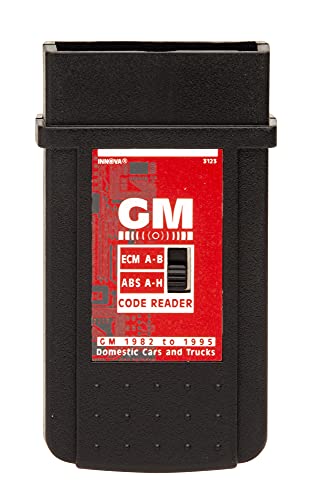
INNOVA 3123 GM OBD1 Code Reader, Windows XP
Owners of pre-1996 GM vehicles who need a dedicated reader for that generation's proprietary codes and connector.
Coverage varies by tool and by model year, so check a specific tool against a specific vehicle before buying.
| OBD1 | OBD2 | |
|---|---|---|
| Model years | Roughly 1981 to 1995 | 1996 to present, mandatory in the US |
| Connector | Manufacturer-specific, varies by brand | Standardized 16-pin trapezoid connector |
| Code format | Manufacturer-specific numbering | Standardized 5-character codes (P0xxx etc.) |
| Reader compatibility | One reader rarely covers multiple brands | One generic reader covers virtually all vehicles |
| Live data | Limited, manufacturer-dependent | Standardized PIDs available on every vehicle |
| Typical price | $9 to $65 for adapters and dedicated readers | $15 to $50 for a basic reader |
Why 1996 is the hard line
The US federal government mandated OBD2 compliance for all cars and light trucks sold starting with the 1996 model year. Before that, each manufacturer built its own onboard diagnostic system with its own connector shape, pin layout, and code numbering, which is why a single generic reader cannot cover every pre-1996 vehicle the way it covers every post-1996 one.
A handful of 1994 and 1995 models were built OBD2-compliant early as manufacturers phased in the standard, so the model year alone is not a perfect guarantee, but it is the right first check for almost every vehicle.
What an OBD1 to OBD2 adapter cable actually does
Adapter cables that convert a 12-pin GM connector or a 7-pin Ford connector to a 16-pin OBD2 shape do not turn an OBD1 vehicle's computer into an OBD2 one. They only make the physical connector compatible so a specific scan tool built to speak that manufacturer's OBD1 protocol can plug into the vehicle's original port shape.
A generic OBD2 reader plugged into one of these adapters will not read codes, because the vehicle's computer is still speaking OBD1 protocol underneath. The scan tool on the other end has to know how to interpret that older, manufacturer-specific data stream.
Finding your connector
Pre-1996 GM vehicles typically use a 12-pin ALDL connector, Ford used a variety including a round connector and later a 7-pin design, and other manufacturers had their own layouts entirely. If you are not sure which generation your vehicle is, check the connector shape under the dash before buying any tool, since that is the fastest way to confirm OBD1 versus OBD2 without guessing from model year alone.
Live data and code depth differences
OBD2's standardized PIDs mean any generic scanner can pull the same live data parameters, like coolant temperature or fuel trim, from any 1996-or-newer vehicle. OBD1 systems varied enough between manufacturers that live data support depends entirely on what the specific reader was built to decode for that brand and model year, so coverage is inconsistent even within the same manufacturer's OBD1 lineup.
When it makes sense to buy an OBD1 tool at all
If you own or are restoring a classic vehicle from the OBD1 era, a dedicated reader for that specific manufacturer is the only path to reading its codes at all, since no universal solution exists. For anyone with a mixed garage spanning both eras, expect to own two separate tools rather than one that bridges both.
OBD2
Anyone with a 1996-or-newer vehicle, which is nearly every vehicle a reader will ever plug into today.
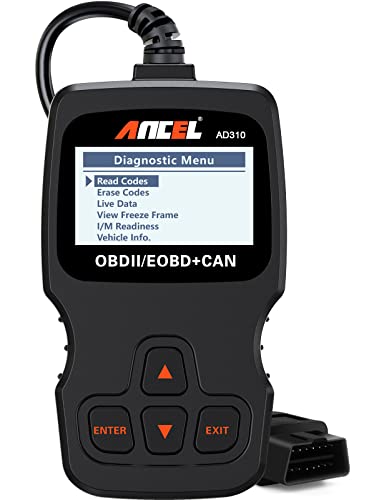
Other tools in this comparison


Common questions
How do I know if my car is OBD1 or OBD2?
Check the model year first: 1996 or newer means OBD2 in the US. If it is 1994 or 1995, check under the dash for the connector shape, since some manufacturers went OBD2 slightly early. Anything 1995 or older with the older-style connector is OBD1 and needs a manufacturer-specific tool.
Can I use an OBD2 scanner on an OBD1 car with an adapter?
Only if the scanner itself was built to also speak that vehicle's OBD1 protocol. A physical adapter cable changes the connector shape, not the communication protocol, so a purely generic OBD2 reader plugged into an adapter still will not read OBD1 codes.
Are OBD1 codes the same numbers as OBD2 codes?
No. OBD2 uses a standardized format like P0300 that means the same thing across every manufacturer. OBD1 codes are manufacturer-specific numbers, sometimes just one or two digits, and the same number can mean something completely different from one brand to another.
Why does my 1995 truck seem to use a 16-pin connector?
A small number of 1994 and 1995 vehicles were built OBD2-compliant ahead of the 1996 mandate as manufacturers phased in the new standard. If the connector is the standard 16-pin trapezoid shape and a generic OBD2 reader successfully pulls standardized codes, treat it as OBD2 regardless of the model year.
Do OBD1 vehicles still need emissions testing?
Requirements vary by state and county, and OBD1 vehicles are generally tested by tailpipe sniffer or visual inspection methods rather than the OBD2 readiness monitor check used on 1996-and-newer vehicles. Check your local program's rules for the exact requirement on a pre-1996 vehicle.