Flashing check engine light
Quick answer
A flashing check engine light means the engine computer has detected an active misfire severe enough to send unburned fuel directly into the exhaust system, where it can ignite against the catalytic converter and destroy it within minutes, so the correct response is to reduce load and stop driving as soon as it is safe, not to finish the trip.

FOXWELL NT301 OBD2 Scanner Live Data Professional Mechanic OBDII Diagnostic Code Reader Tool for Check Engine Light
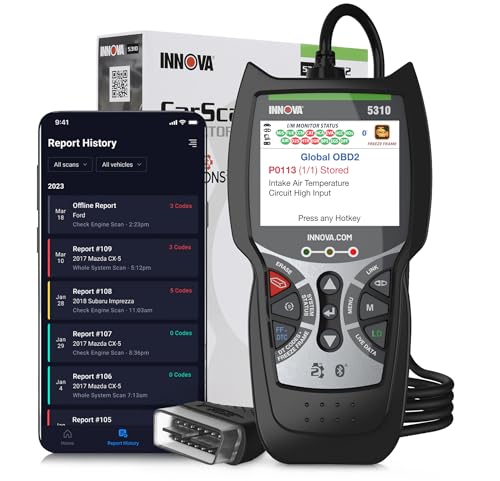
A scanner that shows live data lets you see which cylinder is misfiring and how the misfire counter is climbing in real time, which is the information that confirms how severe the active fault actually is once the vehicle is safely stopped.
Coverage varies by tool and by model year, so check a specific tool against a specific vehicle before buying.
What a flashing light physically represents
A flashing check engine light is not a more urgent version of a steady light in some abstract sense. It represents a specific, physically damaging condition: the engine control module has detected a misfire rate severe enough that unburned fuel and air are passing through the cylinder and into the exhaust system without being combusted.
That unburned fuel does not simply vent harmlessly. It reaches the catalytic converter, where the extreme heat of the converter's normal operation can ignite it. Because the converter was not designed to be a combustion chamber, that ignition raises internal temperatures far past what the ceramic substrate inside it can survive.
Why this can destroy a catalytic converter in minutes, not miles
This is the point that gets softened too often and should not be: a flashing check engine light left unaddressed can melt the internal substrate of a catalytic converter within minutes of continued driving, not after some extended distance. Once the substrate melts or partially collapses, it commonly clogs exhaust flow, which can lead to a cascade of additional damage including exhaust backpressure that affects engine performance further.
A catalytic converter replacement is one of the more expensive single repairs on a modern vehicle. A misfire that is caught and addressed before extended driving is a comparatively minor repair. A misfire that is driven through for miles while flashing routinely turns into both repairs at once.
What actually causes the misfire behind the flash
Common root causes include a failed or failing ignition coil, a fouled or worn spark plug, a leaking fuel injector, or a vacuum leak severe enough to create a dangerously lean condition in one cylinder. The specific cause is confirmed with a scan tool once the vehicle is stopped, by reading the misfire counter per cylinder and any related codes such as those in the P0300 through P0308 misfire range.
What to do the moment you see it flashing
Reduce throttle input and engine load immediately. Do not accelerate hard, climb a grade under load, or continue at highway speed if it can be avoided. Find the nearest safe place to pull over and stop the vehicle rather than attempting to finish the current trip. This is not overly cautious advice; it is the correct response to an active condition that gets more expensive with every additional minute of running.
Once stopped safely, do not restart and continue driving on the assumption that the light might turn steady again. Arrange a tow or a diagnostic visit rather than driving further on a misfire this severe.
What not to do
Do not keep driving because the vehicle still seems to run. A misfire severe enough to flash the light is actively damaging the exhaust system even if the car does not feel dramatically different to drive. Do not clear the code and continue driving to see if it comes back, since clearing the code does nothing to stop the misfire itself. Do not assume a flashing light and a steady light carry the same urgency; they do not.
- Do not continue at highway speed or under heavy load
- Do not clear the code and keep driving to test it
- Do not ignore it because performance still feels mostly normal
- Do not tow with the engine running if the flash persists at idle
| Signal | Underlying condition | Risk of continued driving | Correct response |
|---|---|---|---|
| Flashing | Active severe misfire, raw fuel entering exhaust | Catalytic converter damage within minutes | Reduce load, stop driving as soon as safely possible |
| Steady | Confirmed fault, not actively destructive | Low in the short term for most faults | Read the code, schedule a repair |
| Flashing at idle only | Misfire condition present even at low load | Still high | Stop; do not drive to a shop under its own power |
| Flashing that becomes steady after stopping | Misfire condition eased once load was removed | Reduced but unresolved | Still requires diagnosis before normal driving resumes |
Equipment mentioned here
- TOPDON
TOPDON Carpal OBD2 Scanner Bluetooth - All System Diagnostic Tool with AI
- full system
- wireless
$40.99 Check pricePrices change often - TOPDON
TOPDON TopScan Lite OBD2 Scanner, Bidirectional Scan Tool, 8 Resets & AI
- bidirectional
- service resets
$51.99 Check pricePrices change often - LEE-3
LEE-3 OBD2 Bluetooth Scanner Engine AT ABS SRS Four-System Code Reader
- ABS + SRS
- wireless
$54.00 Check pricePrices change often - AUTOPHIX
AUTOPHIX 3210Pro Bluetooth OBD2 Scanner with ABS SRS Transmission Live Data
- live data
- ABS + SRS
- wireless
$62.99 Check pricePrices change often - XTOOL
XTOOL A30D Bidirectional OBD2 Scanner Diagnostic Tool All System & 19 Reset
- full system
- bidirectional
- service resets
$119.00 Check pricePrices change often



Common questions
How much damage can a flashing check engine light actually cause?
The unburned fuel passing into the exhaust during a severe active misfire can ignite against the catalytic converter, raising internal temperatures high enough to melt the ceramic substrate inside it. This kind of damage can occur within minutes of continued driving under load, turning a moderate repair like a coil or injector into a full converter replacement as well.
Can I drive slowly to the nearest repair shop if the light is flashing?
Reduce load and get to a safe stop first rather than treating a nearby shop as the destination. Even slow driving under any load keeps unburned fuel moving into the exhaust. If the shop is not immediately reachable without load or speed, stopping and arranging a tow is the safer choice.
What codes usually show up with a flashing light?
Misfire codes in the P0300 through P0308 range are the most common, with P0300 indicating a random or multiple cylinder misfire and P0301 through P0308 indicating a specific cylinder. The exact cylinder count depends on the engine.
Does a flashing light always mean the catalytic converter is already damaged?
Not necessarily. A flashing light signals an active condition capable of causing that damage, not confirmation that it already happened. Stopping promptly reduces or eliminates the exposure time. The longer the vehicle continues running under the condition, the more likely damage becomes.
Is it safe to restart the engine after it stops flashing?
A light that stops flashing once you are stopped and idling does not mean the underlying misfire is resolved. Arrange diagnosis before resuming normal driving rather than assuming the condition cleared on its own.
What is the difference between a misfire and a rough idle without a flashing light?
A rough idle without a flashing light is often a milder or intermittent condition, such as a vacuum leak or a single weak cylinder that has not yet met the severity threshold the module uses to flash the lamp. It still deserves attention but does not carry the same immediate risk of exhaust system damage.