Best OBD2 scanners
Quick answer
The BlueDriver at $94.95 is the best all-around OBD2 scanner because it pairs to a free app for ABS, SRS and TPMS codes with no subscription, while a $29.99 reader like the ANCEL AD310 only reads and clears the generic engine codes.
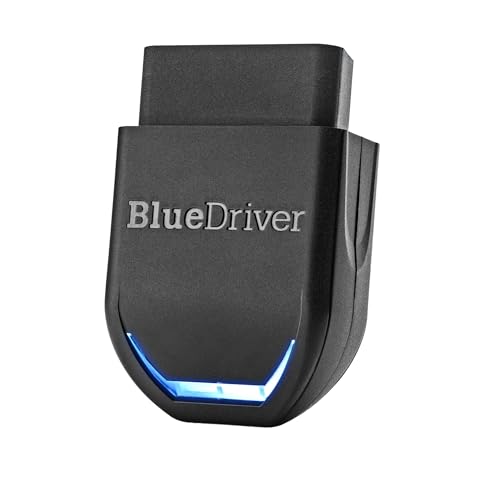
BlueDriver OBD2 Scanner Bluetooth, No Subscription, ABS SRS TPMS
BlueDriver reads and clears codes on the engine, ABS, SRS and TPMS systems through its companion app, with no subscription required, which covers what most owners need without paying for a shop-grade tablet.
Coverage varies by tool and by model year, so check a specific tool against a specific vehicle before buying.
The three tiers
Beginner: Best first OBD2 scanner
Who it is for: someone who just wants to know why the check engine light came on before deciding whether to call a shop

The ANCEL AD310 reads and clears generic OBD2 codes on any vehicle built in 1996 or newer, with no phone, no app and no subscription. The screen shows the code and a short definition directly, which is all a first-time buyer needs to decide if the light means "drive to a mechanic" or "keep driving carefully".
Not for: anyone who wants ABS, SRS or transmission codes, live sensor data, or the ability to command a component. It reads the generic engine codes only.
Intermediate: Best OBD2 scanner for most owners
Who it is for: a DIYer who wants ABS, SRS and TPMS visibility along with the engine light and does not want to buy a subscription
- Intermediate pick
BlueDriver OBD2 Scanner Bluetooth, No Subscription, ABS SRS TPMS
- ABS + SRS
- service resets
- wireless
$94.95 Check pricePrices change often
BlueDriver at $94.95 pairs over Bluetooth to a free iOS or Android app that reads and clears codes on the engine, ABS, SRS and TPMS systems and has no ongoing subscription fee. The app also gives a plain-language repair report pulled from other owners with the same code, which a $30 reader cannot do.
Not for: anyone who needs to command a component, such as cycling an ABS pump or coding a new key. That requires a bidirectional scan tool.
Expert: Best OBD2 scanner for real repair work
Who it is for: someone doing brake bleeds, sensor replacements or actuator tests and needs to command the car, not just read it
- Expert pick
TOPDON AD800BT V2.0 Bidirectional OBD2 Scanner with Lifetime Free Update
- bidirectional
$299.99 Check pricePrices change often

The TOPDON AD800BT V2.0 at $299.99 is a bidirectional scan tool, so it can send a command back to a module, such as running the anti-lock brake bleed sequence or firing an injector on demand, rather than only reporting what a sensor already sent. It ships with lifetime free software updates.
Not for: someone who only wants to know why the check engine light is on. A $500 tablet is wasted money for a task a $30 reader already handles.
| Scanner | Price | Capability | Best for |
|---|---|---|---|
| ANCEL AD310 | $29.99 | Read and clear generic codes | A first check engine light |
| Autel AL319 | $27.99 | Enhanced code reading | Budget-conscious first-time buyers |
| Innova 5210 | $79.96 | Live data, battery test, oil reset | DIYers who want more than codes |
| BlueDriver | $94.95 | ABS, SRS, TPMS, no subscription | Most owners doing their own diagnosis |
| XTOOL A30D | $119.00 | Full system, bidirectional, resets | DIY mechanics ready to fix, not just read |
| TOPDON AD800BT V2.0 | $299.99 | Bidirectional control, lifetime updates | Real brake, sensor and actuator work |
What is the difference between a code reader and a scan tool?
A code reader talks to your car in one direction: it asks the engine computer for stored trouble codes and shows them to you. It cannot ask the computer to do anything, and it usually only sees the engine system.
A scan tool goes further by also pulling live data (the actual sensor readings in real time, not just a stored fault) and, on the more capable end, sending commands back to a module. That second direction is what "bidirectional" means, and it is the line between diagnosing a car and actually repairing one.
Do I need ABS and SRS coverage?
If your dashboard has only ever shown the check engine light, a generic reader is enough. If you have seen an ABS light, an airbag light, or you are chasing an intermittent traction control fault, you need a scanner that explicitly lists ABS and SRS coverage, since the base OBD2 protocol only guarantees access to the powertrain codes.
Coverage for ABS and SRS varies significantly by manufacturer and model year, so check the specific vehicle list on any scanner before assuming it will read those systems on your car.
Is a $300 bidirectional scanner worth it for a DIYer?
It depends entirely on what kind of work you actually do. Replacing an alternator, a battery or a set of spark plugs never requires bidirectional control. Bleeding ABS brakes correctly, replacing a steering angle sensor, or coding a new key almost always does.
If you are not sure which category your typical job falls into, start with the intermediate tier and upgrade only after you hit a wall a code reader cannot get past. That wall is usually obvious: the repair procedure explicitly calls for an "active test" or a "bidirectional command."
- ABS bleed sequences on most modern vehicles need a bidirectional command, not gravity bleeding alone
- Electronic parking brake service on many vehicles needs the caliper retracted electronically before pad replacement
- Steering angle sensor calibration after an alignment often requires a scan tool procedure
How much does vehicle age change what a scanner can do?
Every vehicle sold in the United States since 1996 supports the base OBD2 protocol for generic powertrain codes, so any basic reader works on any of them. ABS, SRS, transmission and bidirectional access are manufacturer-specific extensions layered on top of that base protocol, and how far back those extensions reach varies by brand and by scanner.
A vehicle from the late 1990s or early 2000s may have very limited ABS/SRS or bidirectional access even on an expensive scanner, simply because the car itself was not built with that level of computer control. Check the listing coverage table for your specific model year rather than assuming newer software fixes an older car.
How we chose
This roundup is researched from the manufacturer specifications, listed capabilities and owner reports published on each product listing, not from hands-on use of every unit. Every price and capability claim here traces back to the listing text itself, and the capability flags (live data, bidirectional control, ABS/SRS coverage, wireless pairing) are only marked true when the listing states them outright.
We started from 175 OBD2 products and separated them by what they can actually do rather than by brand recognition. A code reader that only reads and clears generic powertrain codes sits in a different tier than a scanner that streams live sensor data, and both sit apart from a bidirectional tool that can command a module. Price alone is a poor filter, since two tools at the same price often have very different capability lists.
Vehicle coverage varies by tool, by model year and sometimes by trim, so no recommendation here should be read as a guarantee that a given scanner will unlock every function on your specific vehicle. Always check the listing coverage notes for your make and model year before buying, especially for ABS/SRS and bidirectional functions on vehicles older than roughly 2008.
Buying tips
Do I need a scanner or just a code reader?
If the only question is "what does this code mean and how bad is it," a basic code reader under $30 answers that fully. Bidirectional control, live graphing and ABS/SRS access are for people who plan to actually fix something, not just diagnose it. Buying more tool than the question requires is the single most common mistake in this category.
Does it need a subscription?
Several scanners in this category, including some full-system models, charge an annual fee to keep receiving vehicle coverage updates. BlueDriver and most basic code readers do not. Check the listing for the word "subscription" or "lifetime update" before buying, since a cheap scanner with a $60 yearly fee is not actually cheap.
Bluetooth dongle or standalone handheld?
A Bluetooth dongle that pairs to your phone is smaller, usually cheaper and gets its screen and processing power from a device you already own. A standalone handheld or tablet works without a phone and typically has more direct hardware to run bidirectional commands and drive graphing without lag. See our comparison of a handheld scanner versus a Bluetooth dongle for the tradeoffs.
What does clearing a code actually do?
Clearing a code turns off the check engine light and erases the stored fault, but it does not fix whatever triggered it. If the underlying problem is still present, the light comes back, often within one drive cycle. See our guide on clearing codes versus fixing the fault before you clear anything ahead of a sale or a smog check.
Other options worth knowing about
- LJPXHHU
OBD2 Bluetooth Scanner Car Code Reader for iOS, Android and Windows
- wireless
$13.98 Check pricePrices change often - Veepeak
Veepeak Mini Bluetooth OBD2 Scanner Code Reader for Android (NOT for iOS)
- wireless
$14.99 Check pricePrices change often - MOCATEC
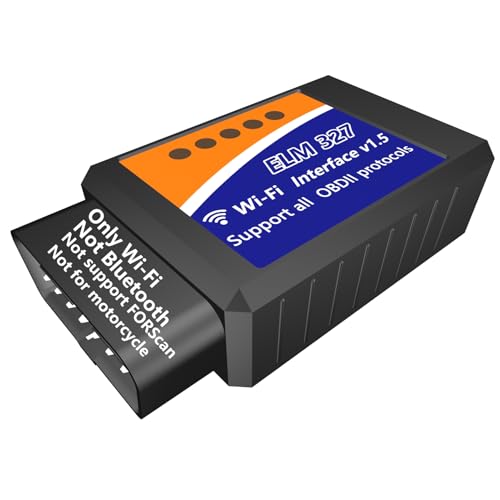
WiFi ELM327 OBD2 Adapter WiFi ELM 327 OBD Scanner for Universal 12V Vehicle
- wireless
$15.95 Check pricePrices change often




Common questions
Will a cheap OBD2 scanner damage my car?
No. A basic code reader only requests information from the engine computer through the standard OBD2 port; it cannot send a command that damages anything. The risk with bidirectional tools is different: sending the wrong active test to the wrong module can put a system into an unexpected state, so those commands should be used with the repair procedure in hand, not experimentally.
Do I need a subscription to use an OBD2 scanner?
Most basic code readers and the BlueDriver dongle have no subscription. Some full-system and professional scanners charge an annual fee for continued vehicle coverage updates after the first year or two. Always check the listing for subscription terms before buying, since it changes the real cost of ownership significantly.
Can an OBD2 scanner read ABS and airbag codes?
Only if the specific scanner lists ABS and SRS coverage. The base OBD2 protocol only guarantees access to engine and emissions codes; ABS, SRS and other body systems are optional manufacturer extensions that not every scanner supports, and coverage varies by vehicle make and model year.
What is the difference between a Bluetooth dongle and a handheld scanner?
A Bluetooth dongle plugs into the OBD2 port and sends data to an app on your phone, so the phone provides the screen and processing. A handheld or tablet scanner has its own screen and does not need a phone. Dongles are usually cheaper and smaller; handhelds are usually faster for bidirectional commands and work without a phone nearby.
How do I know if I need a bidirectional scan tool?
If you only want to read what a code means, you do not. If a repair procedure you are following explicitly calls for an "active test," a "bidirectional command," or a system calibration such as steering angle or ABS bleeding, then yes, a basic reader cannot perform that step and you need a scanner that lists bidirectional control.
Why did the check engine light come back after I cleared it?
Clearing a code only erases the stored fault and resets the light. It does not repair whatever caused the fault in the first place. If the underlying issue, such as a failing sensor or a loose gas cap, is still present, the computer will detect it again on a future drive cycle and turn the light back on.