The glovebox kit
Quick answer
A code reader, a phone dongle, a test light and a battery tester cover the four questions a lit lamp actually raises, and the whole kit costs less than a single diagnostic fee at a shop. Read the code first, then decide whether the job is yours or a mechanic’s.
5 items, under $100 as listed.

MOTOPOWER MP69033 Car OBD2 Scanner Code Reader Engine Fault Scanner CAN Diagnostic Scan Tool for All OBD II Protocol Cars Since 1996, Yellow
A handheld reader needs no phone, no pairing and no app subscription, and it works in a cold car park with a dead phone battery. This is the tool that tells you the code number and lets you see whether it comes straight back after clearing.
Coverage varies by tool and by model year, so check a specific tool against a specific vehicle before buying.
This kit exists to answer one question: why is the light on, and does it mean I should stop driving. It does not attempt to diagnose the fault to a component, because doing that honestly needs live data and the tools in the next kit up.
It is deliberately small. Almost everyone who buys a full diagnostic tablet as their first purchase uses about four of its functions, and the four they use are all in here. Start with this, find out how often you actually reach for it, and buy upward from evidence rather than from optimism.
The complete kit
Amazon shows the items and asks you to confirm before anything is added. Affiliate link.
Why each item is on the list
Read the code
Handheld code reader: A handheld reader needs no phone, no pairing and no app subscription, and it works in a cold car park with a dead phone battery. This is the tool that tells you the code number and lets you see whether it comes straight back after clearing.
Phone dongle for live readings: A dongle turns a phone into a live data display, which the cheapest handheld readers cannot do. Having both is not redundant: the handheld is the one that always works, and the dongle is the one that shows you a graph.
Check the basics first
Battery and charging tester: Low system voltage sets codes across unrelated modules, and a weak battery is the single most common cause of a set of communication codes that look catastrophic. Check voltage before you believe anything else the car tells you.
Circuit test light: Most circuit codes are a connector, a chafed wire or a blown fuse rather than a failed component. A test light finds a dead circuit in seconds and costs less than a lunch.
The two cheap fixes worth owning
Mass air flow sensor cleaner: A contaminated mass air flow sensor is a leading cause of lean and air metering codes, and cleaning it is a ten minute job with a purpose made spray. Never clean one with anything else: the sensing element is a hot wire or film and ordinary solvent destroys it.
Get this kit as a printable list
One page with every item in this kit and its budget band, so you can cost the whole thing before buying any of it.
After the list, a few short emails, then a couple a month at most. Unsubscribe anytime. You can also just read it on the site.What you can skip
- A diagnostic tablet. Nothing in this kit needs one, and a tablet bought before you know which functions you use is the most commonly regretted purchase in this category.
- Brand specific scan tools, unless you own only that brand and intend to keep it. Generic OBD-II covers every emissions related powertrain code on every car sold in the United States from 1996 onward.
- Catalytic converter cleaner as a response to a catalyst efficiency code. It is cheap enough to try, but the code is far more often a lazy downstream oxygen sensor or an exhaust leak, and pouring a bottle in before checking those wastes the only easy diagnostic window you have.
What to upgrade first
- Live data with graphing, which is the step from knowing the code to knowing the cause. That is the driveway kit.
- A multimeter, the moment a code points at a circuit rather than a system. A test light tells you whether a circuit is alive; a meter tells you whether it is healthy.
The whole kit as cards
- Handheld code reader
A handheld reader needs no phone, no pairing and no app subscription, and it works in a cold car park with a dead phone battery. This is the tool that tells you the code number and lets you see whether it comes straight back after clearing.
Under $25 Check priceBudget band; Amazon shows the current price - Phone dongle for live readings
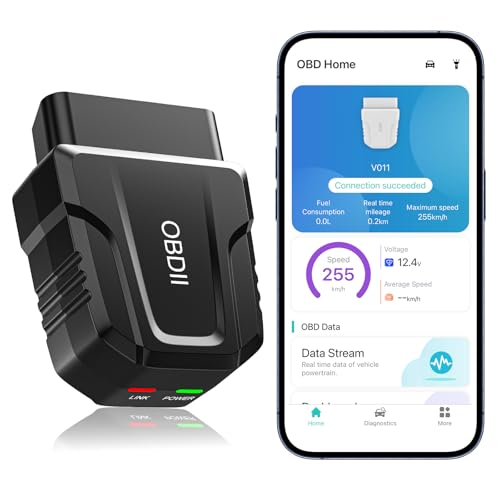
OBD2 Scanner Diagnostic Tool, Car Scanner for iOS & Android, Bluetooth 5.4
A dongle turns a phone into a live data display, which the cheapest handheld readers cannot do. Having both is not redundant: the handheld is the one that always works, and the dongle is the one that shows you a graph.
Under $50 Check priceBudget band; Amazon shows the current price - Battery and charging tester
Low system voltage sets codes across unrelated modules, and a weak battery is the single most common cause of a set of communication codes that look catastrophic. Check voltage before you believe anything else the car tells you.
Under $25 Check priceBudget band; Amazon shows the current price - Circuit test light
Heavy Duty 6-24V Automotive Circuit Tester w/Replacement Indicator Light
Most circuit codes are a connector, a chafed wire or a blown fuse rather than a failed component. A test light finds a dead circuit in seconds and costs less than a lunch.
Under $25 Check priceBudget band; Amazon shows the current price - Mass air flow sensor cleaner
A contaminated mass air flow sensor is a leading cause of lean and air metering codes, and cleaning it is a ten minute job with a purpose made spray. Never clean one with anything else: the sensing element is a hot wire or film and ordinary solvent destroys it.
Under $25 Check priceBudget band; Amazon shows the current price


Compare this with the other kits
Common questions
What does the the glovebox kit cost in total?
As listed it comes to under $100 across 5 items. The band rounds the catalog total up; treat it as the shape of the budget rather than a quote. The scan tool dominates it, and everything else is comparatively small.
Do I need to buy all of it at once?
No, and you should not. Buy the scan tool first, because it is the item that tells you which of the others you actually need. The mechanical testers earn their place the first time a code points at compression or fuel pressure, and until that happens they sit in a drawer.
Why three kits instead of one list at three prices?
Because they answer three different questions. The glovebox kit answers why the lamp is on, the driveway kit answers what is actually wrong, and the home shop kit lets you prove it before buying a part. Each one adds a capability the one below it does not have, which is a different thing from adding money.
What should I not buy from this list?
The what you can skip section on this page names it explicitly, and it is the part worth reading twice. The short version is that capability you have no current job for is the most commonly regretted purchase in this category, and a tool bought in response to a real job almost never is.