Best battery load testers
Quick answer
The ANCEL BA101 at $45.99 is the best battery load tester for most owners because it combines a 100-2000 CCA load capacity with a charging and cranking system analyzer, checking the battery and the alternator in one test.

ANCEL BA101 Car Battery Tester, 12V Digital Automotive Alternator Meter Diagnostic Tool,100-2000 CCA Load Capacity, Charging & Cranking Analyzer for Truck, Boat, RV, Marine Vehicle, and More
At $45.99, the ANCEL BA101 tests up to 2000 CCA and includes both charging and cranking system analysis, which means it checks whether the alternator is charging correctly in addition to whether the battery itself holds a load.
Coverage varies by tool and by model year, so check a specific tool against a specific vehicle before buying.
The three tiers
Beginner: Best cheap battery load tester
Who it is for: someone who wants a straightforward pass or fail check on a car, truck or RV battery

The QWORK 12V 100A tester at $20.97 tests batteries in cars, trucks, RVs and golf carts with alternator testing included, which covers a basic health check without spending much more than the cost of a single battery terminal cleaning kit.
Not for: anyone who wants a higher CCA capacity for testing larger truck or commercial batteries, or a more detailed charging system readout.
Intermediate: Best all-around battery load tester
Who it is for: a DIYer who wants both a battery load test and a charging system check in one reliable tool
The ANCEL BA101 at $45.99 has a 100-2000 CCA load capacity and a digital display for both battery and alternator testing, which lets you distinguish a weak battery from a failing alternator, two different problems that can look similar from the driver's seat.
Not for: someone who specifically wants the reputation and long track record of an established brand name over a digital automotive-tool brand.
Expert: Best trusted-brand battery load tester
Who it is for: someone who wants a battery tester from a long-established brand known specifically for battery charging and testing equipment
- Expert pick
Schumacher Electric Battery Load Tester, 6V/12V, BT-100
$54.99 Check pricePrices change often

The Schumacher Electric BT-100 at $54.99 comes from a brand built specifically around battery charging and testing equipment, which carries a longer track record in this specific category than general automotive tool brands.
Not for: someone who only needs an occasional basic check and does not place extra value on brand history in this specific category.
| Tester | Price | Capability | Best for |
|---|---|---|---|
| QWORK 12V 100A | $20.97 | 100-1000 CCA, alternator testing | Basic pass/fail check |
| Yaegoo Battery Load Tester | $21.95 | 12V 100A / 6V 50A | 6V and 12V battery coverage |
| TOPDC 100A | $29.99 | 100-1000 CCA | Budget CCA range coverage |
| MOTOPOWER MP0515A | $35.99 | 100-2000 CCA, cranking/charging test | Wider CCA range |
| ANCEL BA101 | $45.99 | 100-2000 CCA, digital display | Battery plus alternator check |
| Schumacher Electric BT-100 | $54.99 | 6V/12V load test | Established battery-tool brand |
Why does a battery test normal voltage but still fail to start the car?
A battery can hold a normal resting voltage, often around 12.6 volts when fully charged, while still lacking the actual capacity to deliver the current an engine needs during cranking. This happens as internal battery plates degrade with age, reducing the battery's ability to sustain current under load even though its resting voltage still looks acceptable.
A load tester specifically exposes this weakness by drawing a controlled current similar to a real start attempt and watching how far the voltage drops and how quickly it recovers, which a simple voltmeter reading cannot reveal.
How do I know if it is the battery or the alternator?
A weak battery and a failing alternator can both produce dimming lights, slow cranking, or a dead battery, which is why testing both together matters. A battery load test checks the battery's own capacity; a charging system test checks whether the alternator is producing correct voltage while the engine runs to keep the battery charged.
- Battery fails load test, alternator charges correctly: replace the battery
- Battery passes load test, alternator undercharges or overcharges: repair or replace the alternator
- Both fail: address both, since a failing alternator can also shorten a new battery's life
Does a scanner-integrated battery test replace a dedicated tester?
Some OBD2 scanners include a basic battery test feature, which is convenient for a quick check but generally applies a lighter or less precise load than a dedicated tester built specifically for this purpose. If battery diagnosis is a regular part of your work, a dedicated load tester gives a more reliable and repeatable result.
Does temperature affect a battery load test result?
Yes. A cold battery delivers less current than the same battery at a moderate temperature, which is why CCA (cold cranking amps) is specifically defined as output at 0 degrees Fahrenheit and used as the standard rating. Testing a battery on a very cold morning can produce a lower reading than the same battery would show at room temperature, even though nothing about the battery itself has changed.
For the most consistent results when comparing a reading against a battery's rated CCA, testing at a moderate ambient temperature gives a more representative picture of the battery's underlying health rather than a temporary cold-weather dip.
How we chose
This roundup is researched from published manufacturer specifications and listing descriptions across our catalog, not from hands-on testing of every unit. CCA range, charging system analysis features and display type referenced here come directly from what each product listing states.
A load tester applies a controlled electrical load to the battery and measures how the voltage holds up, which gives a more complete picture of battery health than a simple voltage check alone, since a battery can show a normal resting voltage while still failing under actual cranking load.
CCA (cold cranking amps) ratings and tester capacity vary, and matching a tester's rated capacity to your specific battery size matters for an accurate test. Check your battery's CCA rating, often printed on the battery label, against the tester's stated range before testing.
Buying tips
What is the difference between a voltage check and a load test?
A simple voltmeter reading shows the battery's resting voltage, which can look normal even on a battery that will fail under actual starting load. A load tester applies a controlled electrical load similar to what starting the engine demands and measures how the voltage holds up under that load, which is a far more reliable indicator of real-world battery health.
Does a load tester also check the alternator?
Many of the testers in this roundup include a charging and cranking system analysis mode in addition to the battery load test, which checks whether the alternator is producing the correct charging voltage. This matters because a weak battery and a failing alternator can produce similar symptoms, and testing only the battery can miss the actual root cause.
What CCA rating tester do I need?
Check your specific battery's CCA rating, typically printed on the battery case label, and choose a tester rated at or above that number. Most passenger vehicle batteries fall within a 400 to 800 CCA range, which the testers in this roundup comfortably cover, but larger trucks or commercial vehicles can require a higher-capacity tester.
Other options worth knowing about
- Yaegoo
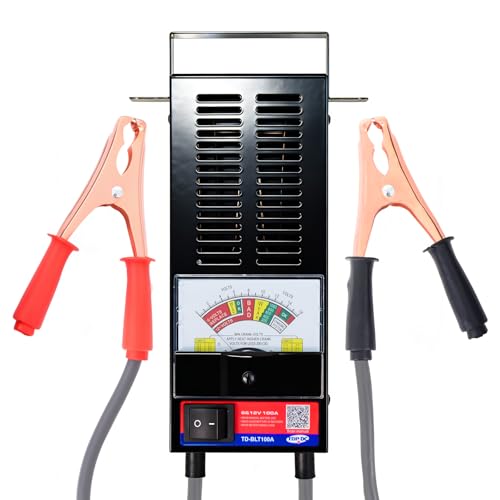
Yaegoo Battery Load Tester, Car Battery Tester 12V 100A / 6V 50A
$21.95 Check pricePrices change often - TOPDC
TOPDC 100A Battery Load Tester, 6V/12V Car Battery Tester, 100-1000 CCA
$29.99 Check pricePrices change often - TOPDON
TOPDON BT100 12V Car Battery Tester, Automotive Battery Load Tester
$51.99 Check pricePrices change often



Common questions
What is a good CCA reading for a car battery?
This depends on the battery's rated CCA, printed on the battery label. A battery testing significantly below its rated CCA, generally more than 20 to 30 percent under, is typically considered weak or failing, even if it still starts the car under normal conditions.
Can I test a battery without removing it from the car?
Yes, most battery load testers connect directly to the battery terminals while it remains installed in the vehicle, which is how nearly all of the testers in this roundup are designed to be used.
Does a battery load tester check the alternator too?
Many testers, including several in this roundup, include a charging and cranking system analysis mode alongside the load test, which checks whether the alternator produces correct voltage while the engine runs. Check the specific listing to confirm this feature is included.
How often should I load test my car battery?
Checking once a year, or before a season with extreme temperatures, is a reasonable practice for most vehicles, since battery capacity typically degrades gradually with age rather than failing without warning. Testing sooner is worth doing if you notice slow cranking or dimming lights.
Why did my battery pass a voltage check but fail to start my car?
A simple voltage reading only shows resting voltage, which can look normal even when the battery cannot sustain enough current under actual cranking load. A load tester applies a controlled load similar to real starting demand, which is why it can catch a weak battery that a voltmeter alone misses.