Best automotive multimeters
Quick answer
The KAIWEETS automotive multimeter at $37.99 is the best pick for most car owners because it adds true RMS accuracy and non-contact voltage detection specifically aimed at automotive circuits, without the price jump of a professional-grade Fluke.
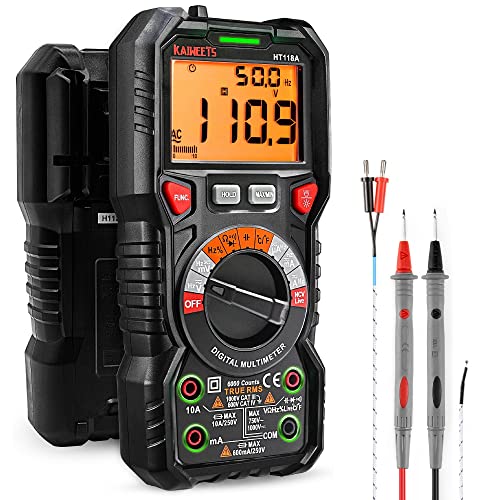
KAIWEETS Digital Multimeter Automotive TRMS Tester 6000 Counts NCV for Car
At $37.99, the KAIWEETS multimeter is built and marketed specifically for automotive use, with true RMS accuracy and 6,000-count resolution, which covers what most car owners need without paying professional-tool prices.
Coverage varies by tool and by model year, so check a specific tool against a specific vehicle before buying.
The three tiers
Beginner: Best first automotive multimeter
Who it is for: someone testing a battery, fuse or simple wiring connection for the first time
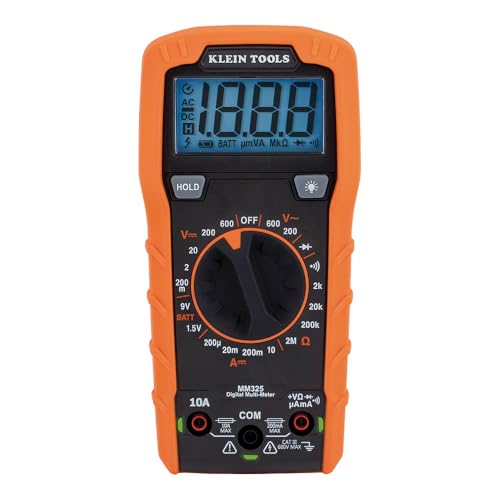
The Klein Tools MM325 at $29.98 handles voltage, current, resistance, diode and continuity testing from a trusted electrical tool brand, which covers the basic checks a car owner needs, such as confirming a battery voltage or testing a fuse.
Not for: anyone who needs true RMS accuracy for diagnosing electrical noise or non-contact voltage detection for finding a live wire without touching it.
Intermediate: Best automotive-specific multimeter for most owners
Who it is for: a DIYer doing regular electrical diagnosis on a car, such as tracing a parasitic drain or testing a sensor circuit
- Intermediate pick
KAIWEETS Digital Multimeter Automotive TRMS Tester 6000 Counts NCV for Car
$37.99 Check pricePrices change often
The KAIWEETS at $37.99 is built specifically for automotive troubleshooting, with true RMS measurement for accurate readings on noisy automotive circuits and non-contact voltage detection to quickly find a live wire before touching it.
Not for: anyone doing professional-grade diagnostic work that requires certified accuracy specifications or advanced logging features.
Expert: Best multimeter for advanced diagnostic work
Who it is for: a technician or serious DIYer who needs certified accuracy and broader measurement range for demanding electrical diagnosis

The Fluke 17B+ at $129.74 measures up to 1,000V AC/DC, 10A of current, plus resistance, continuity, diode, capacitance, frequency and temperature, from a brand widely trusted for measurement accuracy in professional electrical work.
Not for: someone who only needs to check a battery voltage or test a fuse occasionally. That is fully covered by a $30 multimeter at a quarter of the price.
| Multimeter | Price | Capability | Best for |
|---|---|---|---|
| Klein Tools MM325 | $29.98 | Voltage, current, resistance, diode, continuity | Basic checks: battery, fuses |
| AstroAI Digital Multimeter | $34.99 | True RMS, 6000 counts, auto-ranging | Budget true RMS option |
| KAIWEETS Automotive TRMS | $37.99 | True RMS, NCV, automotive-focused | Most car owners doing regular diagnosis |
| Klein Tools MM420 | $64.22 | Auto-ranging TRMS, 10A current | Higher current measurement range |
| Innova 3340 | $100.87 | Professional automotive digital multimeter | Dedicated automotive brand and features |
| Fluke 17B+ | $129.74 | Full range, 1000V, temperature, frequency | Advanced diagnostic work |
What can a multimeter diagnose on a car that a scanner cannot?
An OBD2 scanner reads codes and data the vehicle computer already reports. A multimeter measures the raw electrical values directly at a wire, connector or component, which matters when the problem is a wiring fault, a bad ground, a corroded connector or a component that fails before it ever reports a code to the computer.
Diagnosing a parasitic battery drain, confirming an alternator is charging correctly, or testing a fuse or relay all require a multimeter rather than a scan tool, since these are physical electrical measurements, not computer-reported data.
Do I need true RMS for automotive work?
True RMS matters most when measuring a signal that is not a smooth, steady voltage, such as the pulse-width-modulated signals many modern sensors and actuators use. A non-true-RMS multimeter can show an inaccurate reading on these signals, which can lead to a wrong diagnosis. For simple checks like battery voltage or continuity, the difference rarely matters.
- Battery voltage and continuity checks: true RMS not essential
- Diagnosing a sensor or actuator with a pulsed signal: true RMS recommended
- Tracing electrical noise or an intermittent fault: true RMS strongly recommended
Is a $130 Fluke worth it over a $38 automotive multimeter?
For a car owner doing occasional diagnostic work, the $38 automotive-specific multimeter covers the great majority of practical tasks: battery testing, fuse checking, sensor circuit diagnosis and basic continuity work. The Fluke earns its price with broader measurement range, higher current capacity and the kind of accuracy specification that matters for professional or safety-critical electrical work.
Does a multimeter's safety category rating matter for automotive work?
Multimeters carry a CAT (category) safety rating that indicates how much voltage transient they can safely handle at a given measurement point, originally designed around household and industrial electrical systems. Automotive 12V systems are low voltage compared to household wiring, so this rating matters less for basic car work than it does for anyone also using the same meter around higher-voltage systems.
If the same multimeter will also be used near a hybrid or electric vehicle's high-voltage system, a much higher safety rating and specific training become necessary, well beyond what any multimeter in this roundup is built or rated for.
How we chose
This roundup is researched from published manufacturer specifications on each multimeter listing in our catalog, not from hands-on testing or bench calibration of every unit. Measurement ranges, true RMS claims and automotive-specific features referenced here come directly from what each listing states.
We prioritized multimeters explicitly marketed or specified for automotive use, since a car's electrical system, running on 12 volts with switching circuits and sensor signals, has different practical needs than household electrical work, particularly around non-contact voltage detection and true RMS accuracy for pulsed signals.
A multimeter's accuracy specification and category rating (how much voltage transient it can safely handle) matter for both correct readings and personal safety. Always check a multimeter's specifications against the task at hand rather than assuming any multimeter is interchangeable with any other.
Buying tips
What does "true RMS" mean and do I need it?
True RMS (root mean square) multimeters measure the actual effective value of a signal, including non-sinusoidal waveforms like the pulsed signals many automotive sensors and modules produce. A non-true-RMS multimeter can give an inaccurate reading on these signals. For basic battery and fuse checks it rarely matters; for diagnosing sensor circuits or electrical noise, true RMS is worth having.
Do I need a multimeter with automotive-specific features?
A general-purpose multimeter can measure voltage, current and resistance on a car just as well as a household circuit. What automotive-specific models typically add is non-contact voltage detection tuned for low-voltage 12V systems and duty cycle or frequency measurement, useful for testing components like fuel injectors that pulse rather than run at a steady value.
How does a multimeter differ from a dedicated automotive test light?
A test light gives a fast pass/fail indication of whether voltage is present, which is often enough for basic circuit checks. A multimeter gives an actual numeric reading, which matters when the question is not just "is there voltage" but "is it the right voltage," such as confirming an alternator is charging at the correct level.
What about back-probe pins and test leads?
Testing a live connector without damaging the wiring insulation usually requires back-probe pins rather than piercing the wire itself, since piercing can create a corrosion point later. A back-probe kit paired with your multimeter is a low-cost addition that makes automotive electrical testing considerably easier.
Other options worth knowing about
- Innova
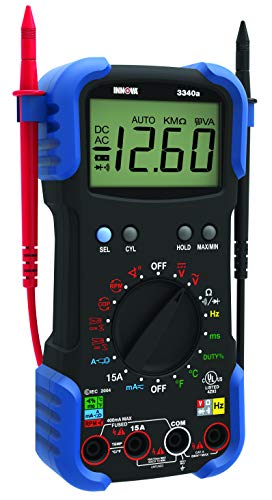
Innova 3340 Professional Automotive Digital Multimeter, Black
$100.87 Check pricePrices change often


Common questions
What is the best multimeter for basic car troubleshooting?
The KAIWEETS automotive TRMS multimeter at $37.99 is a strong all-around choice, since it is built specifically for automotive circuits with true RMS accuracy and non-contact voltage detection, covering the checks most car owners actually need.
Do I need a special multimeter for cars or can I use a regular one?
A general-purpose multimeter can measure voltage, resistance and current on a car just fine. Automotive-specific models typically add features tuned for 12V systems, such as non-contact voltage detection and duty cycle measurement for pulsed signals, which are useful but not strictly required for basic testing.
What does true RMS mean on a multimeter?
True RMS (root mean square) multimeters accurately measure the effective value of non-sinusoidal signals, including the pulsed signals many automotive sensors and actuators produce. A non-true-RMS multimeter can give an inaccurate reading on these signals, which matters for diagnosing sensor and actuator circuits specifically.
Can a multimeter test a car battery?
A multimeter can measure a battery's resting voltage and confirm it is within a normal range, but it does not apply a load the way a dedicated battery load tester does, so it will not show cranking amp capacity under load. For a full battery health check, a load tester gives a more complete picture.
What is the difference between a multimeter and a test light for automotive use?
A test light gives a quick pass or fail indication of whether voltage is present at a point in a circuit. A multimeter gives an actual numeric reading, which is necessary when you need to know the specific voltage, resistance or current value rather than just whether a circuit is live.